Your Custom Text Here
Keeping the Pressure on Peter Franchot; Reaching Out to Pete Buttigieg and the DOT
Peter Franchot, the deciding vote on the Board of Public Works (BPW), recently said the I-495/I-270 toll-lane project, the biggest Public Private Partnership (P3) in the world, is basically just an experiment to “see how it goes” and see if there’s “any real uproar over the tolls.” Follow the Action Item below to remind Mr. Franchot of his responsibility to protect Marylanders, not international developers. Then read the good news about Congressman Anthony Brown’s appeal to U.S. Department of Transportation (DOT) Secretary Pete Buttigieg to stop the toll-lane project’s end run around federal environmental law, followed by a cautionary tale about P3 construction in Virginia.
Action Item
Write Comptroller Franchot care of Emily Gontrum at egontrum@marylandtaxes.gov and/or call Comptroller Franchot at 301-332-1961. This is his cell phone and he said in a recent interview that he invites the public to contact him at this number and leave a voice mail or text.
The Maryland Department of Transporation (MDOT) won’t complete the environmental review process until next fall. Tell Comptroller Franchot that he and the BPW must delay the vote on the first toll-lane contract until the Final Environmental Impact Statement (FEIS) is completed. An FEIS is essential to assess the true cost to taxpayers and the impacts on communities and the environment. Until the FEIS is released, it is impossible to truly know the effects of many key features of the proposed P3 project.
The next steps in the approval process for the first contract, the Developer Phase 1 P3 Agreement, include: review and approval by the Maryland Transportation Authority (MDTA) Board, review -– but without approval authority -- by the budget committees of the Maryland General Assembly, and then a vote by the BPW.
If approved by the BPW, the Phase Developer contract would be awarded and Accelerate Maryland Partners, the awardee, notified to proceed with the preliminary design and some form of collaboration with community stakeholders. There are many fiscal concerns about this project that will affect the State and Maryland taxpayers. Read more in the Dontwiden270.org April 5, 2021 newsletter.
Congressman Urges Federal Review of the I-495 and I-270 Project
U.S. Representative Anthony Brown from Prince George’s County and a member of the U.S. House Transportation and Infrastructre Committee, sent a letter on February 2 to DOT Secretary Pete Buttigieg. According to Rep. Brown’s press release, the letter detailed concerns with Maryland’s I-495 & I-270 Managed Lanes Study. He specifically identified the following issues for consideration:
Lack of Transit Alternatives and Investment
Outdated Approach
The Impact of COVID-19 and the Future of Commuting
Incongruent National Environmental Policy Act (NEPA) process
The Congressman encouraged the DOT to consider the implications of the project on the region and reevaluate the federal government’s role. The U.S. DOT has responsibility for oversight of interstate highways and is required under the NEPA Act to approve the FEIS.
Rep.Brown’s letter can be found here.
For more information, see Congressman Urges Buttigieg to Review I-495/I-270 Project.
Rep. Brown and Montgomery County Council President Tom Hucker held a press conference on April 12, including discussion of transportation priorities. They affirmed that the State needs the right mix of roads and rails and not just expansion of road capacity.
Why We Are Fighting to Prevent What’s Happening on I-66 in Virginia from Happening to Us
Tolls have existed for centuries, initially levied on those travelling by foot, horseback, or wagon and continued with automobiles. Currently, about 29 states have toll roads, with price-managed toll lanes in 11 states. Most roads are built with funds raised from taxes. However, in recent years, states have increasingly looked to private companies to build toll roads and capture the tolls for profit.
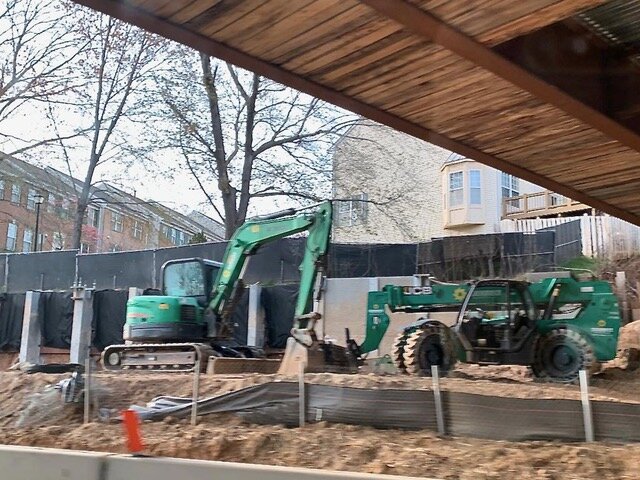
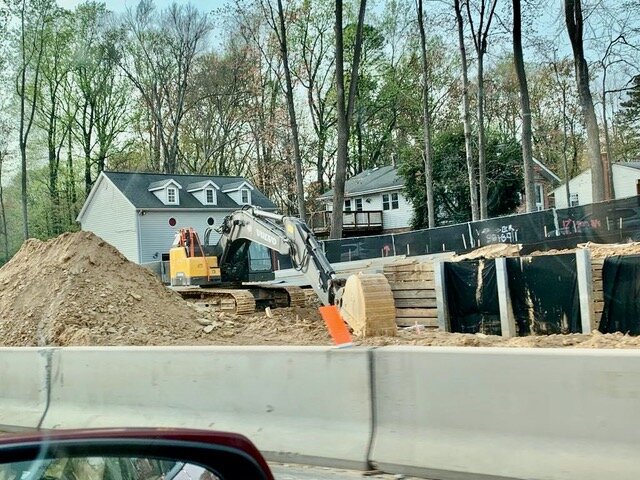
The construction of new toll lanes on I-66 in Virginia is wreaking havoc on local communities and raises concerns about the possibility of similar consequences in Maryland if the I-270 managed lane project goes forward. The following depicts current construction on I-66 and demonstrates why we must prevent this from happening in our communities.
I-66 Inside the Beltway Express Lanes
The I-66 “Inside the Beltway Express Lanes” cover 9 miles of I-66 from I-495 to US Route 29 in Rosslyn. This section began operation in December 2017, operating under dynamic tolling with tolls varying depending on traffic congestion. Its express lanes operate at rush hour with no maximum toll. Tolls have been as high as $46, a totally inequitable price. The Virginia Department of Transportation owns and operates this corridor.
Transform 66 Outside the Beltway Express Lanes Project
In December 2016, a 50-year P3 contract was awarded to I-66 Express Mobility Partners (lead project developer, Cintra) to design, build, and operate I-66 from I-495 to Gainesville. This project will extend I-66 another 22.5 miles west from the Capital Beltway. Early construction activity began in December 2017 with major construction beginning in spring 2018. The express lanes are scheduled to open in December 2022. Two dynamically tolled express lanes will operate alongside three untolled general purpose lanes per direction.
Recently, a Montgomery County resident drove near the area where construction is ongoing for the I-66 “Outside the Beltway Express Lanes” project. She reported the following:
I happened to drive on Route 66 in Virginia all the way towards the end, near the Front Royal exit. It was shocking, truly shocking, to see the construction as they are adding even more lanes to I-66. The amount of construction vehicles, road construction materials, massive hills of dirt, pipes, etc., etc. was overwhelming. I’ve never seen anything quite like it. The construction and new barrier walls being constructed are literally in people’s backyards. Or up against their garages, houses, apartment buildings, pools, walking paths, and parking spaces - within a few feet. There was absolutely no buffer zone between the soon to be new lanes and personal or county property.
After reading this description, a Rockville resident drove over to photograph the construction area. The photos depict what life is like for those who live in the shadow of this project. We can’t let this happen here!

Must Read Recent Articles
Opinion: Protecting a Piece of Md. History From the State’s Beltway Expansion Plan, Maryland Matters, April 9, 2021
Md. Sierra Club: Will the Senate Co-Own Hogan’s Highway Boondoggle?, Maryland Matters, April 9, 2021
Plan to widen congested Capital Beltway fuels fierce debate, Bay Journal, April 5, 2021
Note: Key articles about the highway widening project dating back to August 2018 can be found on our website at https://dontwiden270.org/archives,
THE DEVELOPER PHASE 1 P3 AGREEMENT
Three years ago, Governor Larry Hogan announced his I-495 & I-270 Public-Private Partnership (P3) Program. The project would add toll lanes that private companies would design, build, operate, and collect tolls through a 50-year contract with the State. The Maryland Department of Transportation (MDOT) is rushing ahead with this complex, ever-changing process.
The entire P3 consists of more than 70 miles and encompasses all of I-270 and I-495 in Maryland, as well as the American Legion Bridge. The first phase of the project, known as Phase 1 includes the 37 miles section from the American Legion Bridge to I-270 and I-270 to I-70.
On Jan. 27, 2021, MDOT announced it had selected a preferred alternative from its list of build options. Ten days later, on February 18, 2021, MDOT and the Maryland Transportation Authority (MDTA) announced the selection of Accelerate Maryland Partners, LLC, to be the Phase Developer to oversee the predevelopment work of the Phase 1 P3 project. Refer to our February 21 newsletter for more information about the Accelerate Maryland Partners consortium and its team of companies.
The next steps in the approval process of the Developer Phase Agreement include: review and approval by the MDTA Board, review by the budget committees of the Maryland General Assembly, and approval by the Board of Public Works (BPW), although not necessarily in this order. The BPW has the final decision. If approved by the BPW, the Phase Developer contract would be awarded and Accelerate Maryland Partners notified to proceed with the preliminary design and collaboration with community stakeholders.
The final design for Phase 1 is slated for release by May 2022. The BPW must then approve a construction contract, which might occur in summer 2022, with construction possibly beginning around fall 2022. These dates may change because of both internal and external factors.
Action Item
Write Comptroller Franchot care of his point staff person, Tom Brennan, at tbrennan@marylandtaxes.gov. and/or call Comptroller Franchot at 301-332-1961. This is his cell phone and he said in a recent interview that he invites the public to contact him at this number and leave a voice mail or text.
Write Treasurer Kopp c/o her BPW liaison, Joanna Kille, at jkille@treasurer.state.md.us.
Write Governor Hogan at https://governor.maryland.gov/contact-the-governor/.
Tell them:
No P3 agreement should be approved by the BPW until the Final Environmental Impact Statement (FEIS) is completed. An FEIS is essential to adequately assess impacts to communities, utility conflicts, the environment, and parklands—and the 3,000 comments submitted during hearings on the project.
Governor Hogan’s statements that there will be no cost to Maryland taxpayers is false. In fact, Maryland taxpayers could be stuck with hundreds of millions of dollars in expenses and future costs. See our February 7 newsletter for more information on financial concerns.
Refer to the recent article in the Washington Post about high-profile problems with P3s across the country.
Please help us generate even more emails to Peter Franchot. His vote on the BPW is likely to decide whether this project continues to move forward—or not. If you belong to a homeowners association or civic association, please ask your group’s leaders to distribute this flyer to members. Thank you!
Important New Information from the Comptroller
On March 10, Comptroller Peter Franchot gave an interview (listen here, read more here) on the “Everyday Law” podcast in which he made some startling comments:
According to Comptroller Franchot, only the first phase of the 495-270 P3 is still on the table. He said, “There is no longer a Beltway widening project. There is no phase 2 or 3. It does not exist.
He claimed the P3 is now a $2 billion project, as opposed to the $12 billion project that would have included the Beltway.
He referred to the Phase 1 project as “experimenting with P3s.”
There has been no response from MDOT concerning these comments.
What is the Role of the Maryland Transportation Authority?
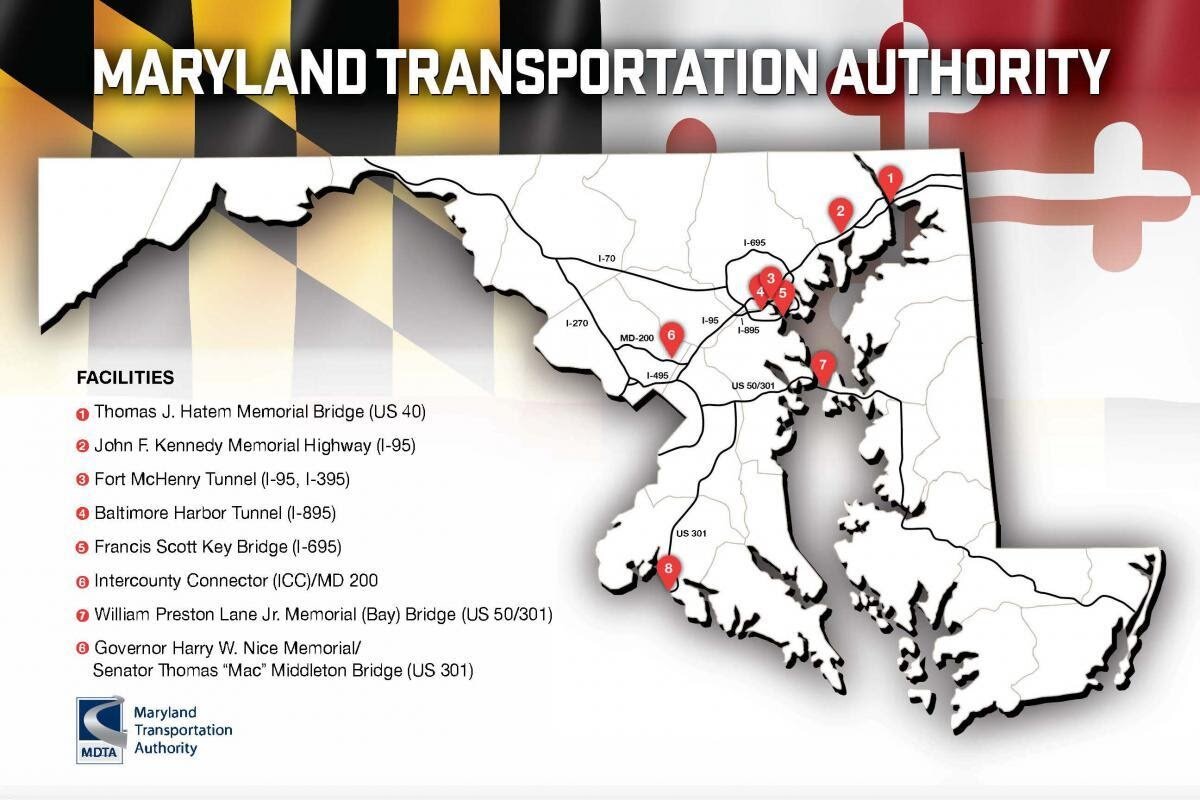
The MDTA is an independent State agency, which was founded in 1971 and is responsible for constructing and operating Maryland’s toll facilities. By State law, MDTA has the responsibility to fix, revise, and set toll rates. All of the MDTA’s projects and services are financed by toll revenue.
Currently, MDTA’s tolling system covers more than 775 road miles of major highways.
On Feb. 25, 2021, MDTA staff provided an update on range setting information for Phase 1 South prior to a Board meeting when the official MDTA staff proposal will be presented. The statutory public comment period will open and be advertised following Board approval to seek public input on the official staff proposal.
MDTA had planned to vote on the predevelopment contract on March 25. However, the vote was delayed because the Maryland Attorney General is reviewing a legal challenge filed by an unsuccessful bidder for the contract. Several steps by State officials remain before the protestor can begin court proceedings.
According to State law, the BPW could proceed with executing the contract if necessary to protect substantial State interests although it is unclear specifically what such State interests entail. The next MDTA Board meeting is scheduled for April 29.
What Impact Can the Maryland Legislature Have?
Under State law, the BPW may not approve a P3 Agreement until the budget committees of the General Assembly have had 30 days to review and comment. However, the legislative review is purely advisory and has no authority to stop the project.
MDOT must formally submit the Predevelopment Agreement (PDA) to the legislature before the 30-day review can begin. Members of the Senate Budget and Taxation Committee and the House Appropriations Committee will review the Phase 1 PDA. The House Transportation and Environment Subcommittee (Chair, Marc Korman) is expected to take a leading role in the review. Delegate Korman plans to arrange a public hearing, call witnesses, and allow public testimony.
It is unknown when MDOT will send the Agreement to the legislature — either concurrent with, or before the votes by the MDTA and BPW. The legislature is scheduled to adjourn on April 12, but does not have to be in session to complete the legislative review.
Legislative hearings could be an important opportunity to obtain relevant information before final contract decisions are made, bring transparency to the State’s plans, and identify potential risks, flaws and the project’s rationale, in a public forum covered by the press.
How Does the Board of Public Works Enable the Project to Proceed?
Maryland’s BPW was created in 1825 and subsequently modified in 1864. Its role is to ensure that State expenditures are necessary, fiscally responsible, fair, and lawful. There is no other state with a similar administrative body.
The Board reviews projects, contracts, and expenditure plans for state agencies. It is responsible for appropriating funds for most contracts exceeding $200,000. The BPW currently reviews about $440 million in proposed contracts every two weeks.
MDOT must obtain approval from the BPW for a contract with the Phase Developer to begin predevelopment design. For the project to move forward, two of the three BPW members must approve the agreement. The three members are: Comptroller Peter Franchot, Treasurer Nancy Kopp, and Governor Larry Hogan. Plans are for the BPW to vote on the Phase 1 South predevelopment proposal in April or May.
Update on the Bill to Protect Historic Cemeteries from Destruction by P3 Highway Projects
Senator Susan Lee and Delegate Sara Love have introduced companion bills SB960 and HB1373 (Highways-Public Private Partnerships-Cultural Preservation) to protect historic African American cemeteries, burial grounds, and cultural heritage sites from encroachment or destruction by proposed highway P3 projects that have not been approved by the State legislature.
A prime example of a threatened site is the Morningstar Moses Cemetery and Hall in Cabin John. The proposed widening of the Capital Beltway with four new toll-lanes could have dire consequences. This community has already been the victim of injustice in the early 1960’s when the original construction of the Beltway split the community in half. This bill would help prevent a further injustice, by requiring both houses of the General Assembly to approve a highway P3 project before the State could acquire right-of-way that encroaches on this site and others like it.
Additional background information was included in the March 20th newsletter about the cemetery and its potential destruction by the proposed highway widening as part of the I-495/I-270 toll-lane project.
SB960 has been referred to the Senate Education, Health and Environmental Affairs (EHE) Committee and the Senate Budget and Taxation Committee. We are hopeful that the bill will be scheduled for a hearing in the final week of session so we can increase the awareness of State policy-makers and the public to the imminent threat of destruction that this P3 poses to vulnerable communities in its path.
Action Item:
If you agree that this bill deserves consideration in the remaining days of the 2021 session, please write your legislators and urge them to request a hearing on SB960 in the Senate EHE Committee.
To view a video about the history of the cemetery and submit a form to tell your legislators to protect African American Cemeteries under threat by widening I-495 and I-270, go to:
Protect Historic African American Cemeteries Under Threat from Highway Expansion
Must Read Article
Maryland explores tightening law on public-private partnerships amid proposal to build new toll lanes, Washington Post, March 27, 2021
There’s Strength in Numbers. Please Help us Grow Our Mailing List
People who read our newsletters take action, and our elected officials take notice! Help spread the word about what we can do to safeguard our environment and promote healthy, efficient, and fair transportation options. Tell your friends and neighbors they can join our newsletter email list by going to https://dontwiden270.org/get-involved and checking the "keep me informed" box. Our website is https://dontwiden270.org/.
Want Links to Our Past Newsletters?
For links to the most recent dontwiden270.org newsletters, go to https://dontwiden270.org/ and scroll down to “What’s happening With 270?” For links to all of our newsletters dating back to August 2018, go to https://dontwiden270.org/news
Bill Introduced to Protect Cemeteries from Highway Projects: A Bill was Introduced to Protect Historic African-American Cemeteries from Destruction by P3 Highway Projects
Bill Introduced to Protect Historic African-American Cemeteries from Destruction by P3 Highway Projects
Legislation has been introduced in the Maryland Senate and House of Delegates by Senator Susan Lee (D-16) and Delegate Sara Love (D-16) that would protect Morningstar Moses Cemetery and Hall (MMC) in Cabin John, Montgomery County, from destruction by the proposed widening of the Capital Beltway as part of the I-495/I-270 toll-lane project. The companion bills are Senate Bill 960 and House Bill 1373, “Public Private Partnerships-Cultural Preservation.”
The MMC is in the African American community of Gibson Grove, which was established by formerly enslaved people in the 1880’s. Project maps show some graves and parts of the Moses Hall Foundation are within the “Limits of Disturbance” of the proposed highway construction. The Maryland Historical Trust has determined that the MMC is historically significant and would be adversely affected by the widening of the Capital Beltway under the proposed I-495/I-270 toll-lane P3. Descendants, community members, and preservationists are trying to protect these important historic sites.
If enacted, the bill would prohibit the Maryland Department of Transportation (MDOT) from acquiring a right-of-way or exercising eminent domain for a highway project that adversely affects such sites unless the General Assembly approves the development of the project.
A Phase Developer has been selected by MDOT to begin pre-development work on Phase 1 of the P3. The Moses Hall and Cemetery are in the path of Phase 1. If the bill passes, it would create one more obstacle to the implementation of Phase 1. It would not only protect African American cemeteries and cultural sites from destruction that would result from the highway widening, but could also hinder the progress of the P3.
Map of Proposed Construction Zone

The bill is currently in the Rules Committees of both the House and Senate. When one or both committees take action to refer the bill to a standing committee for consideration, we will provide an update in our newsletter. We will include contact information so you can write the committee chairs and members to express support for the bill, request a hearing, and a favorable report on the bill to the full House and Senate.
Early History of the Moses Hall and Cemetery
Morningstar Tabernacle No. 88, the official name of the Morningstar Moses Cemetery and Hall, is a chapter of the Order of Moses. The Order of Moses was a Post-Civil War benevolent society set up by formerly enslaved individuals, which used membership dues to provide financial help, burials, and social support to African Americans during segregation.
The cemetery was established in 1885; there were over 70 burials between1894-1977. Moses Hall, a small lodge that hosted chapter meetings and community social gatherings adjoins the cemetery, and remains of the Hall’s foundation are still evident. The Gibson Grove church was formally established in 1898 on adjacent land. The church has been unused since a 2004 fire.
Construction of the Beltway Divided the Community
The Capital Beltway was built through Gibson Grove in the early 1960’s, dividing the Moses Cemetery and Hall from the Gibson Grove Church -- now located on opposite sides of the Beltway. The original construction of the Beltway divided the community; the proposed widening with four additional toll lanes under the I-495/I-270 P3 would have dire consequences.
It threatens further encroachment on this historic African-American community, the cemetery and burial grounds, and the perpetration of another racial injustice at a time when the pursuit of environmental justice is a top national priority.
Members of Maryland’s Congressional Delegation sent a letter to the Federal Highway Administration urging them to avoid physical impacts to the cemetery, hall, and church. The letter expressed concern that with a P3, the details of many design decisions would be in the hands of the private sector. The legislators wrote “…we risk once again committing the error of building roads without regard to the historic, cultural, and social values of vulnerable communities…”
State officials say they are trying to avoid the cemetery altogether but will reduce the impact if that is necessary. The State Highway Administration (SHA) archaeologist said the State tries to minimize damage to historical sites, but if that’s not possible will “mitigate” the impact, for example, by installing a historical marker.